
Why Kenya Gets Ignite Funnels Before Anywhere Else
TL;DR: Ignite Funnels launched in Kenya first because Kenyan entrepreneurs possess the capability but lack operational infrastructure. The platform provides enterprise-grade CRM, automated lead capture, payment processing, and follow-up systems for 1,500 to 3,500 Kenyan shillings monthly ($11 to $27 USD). This addresses the gap between talent and tools, similar to how M-Pesa eliminated financial infrastructure barriers.
Core Answer:
Kenya has high entrepreneurial capability but limited access to business automation infrastructure
Ignite Funnels provides CRM, automated lead capture, payment processing, and email/SMS automation for 1,500 to 3,500 KES monthly
Businesses using CRM software see a 300% increase in conversion rates and $8.71 return for every $1 spent
The platform eliminates the need for manual processes that prevent scalable growth
Kenya's digital economy, M-Pesa adoption, and 48% internet penetration make it ideal for infrastructure-first solutions
I launched Ignite Funnels in Kenya first.
Not because it was easy. Not because the market demanded it.
Kenya represents everything I believe about capability, infrastructure, and what happens when you remove the barriers between the two.
This is mission alignment.
What Is the Infrastructure Gap in Kenya's Entrepreneurial Market?
Here's what I've learned over the last decade building digital marketing systems: talent distribution exceeds infrastructure distribution by an order of magnitude.
You see it everywhere.
Entrepreneurs with drive, vision, and raw capability hit the same wall repeatedly. They solve problems manually because they don't know automated solutions exist. They hustle harder instead of building systems because nobody showed them the alternative.
The problem is not capability.
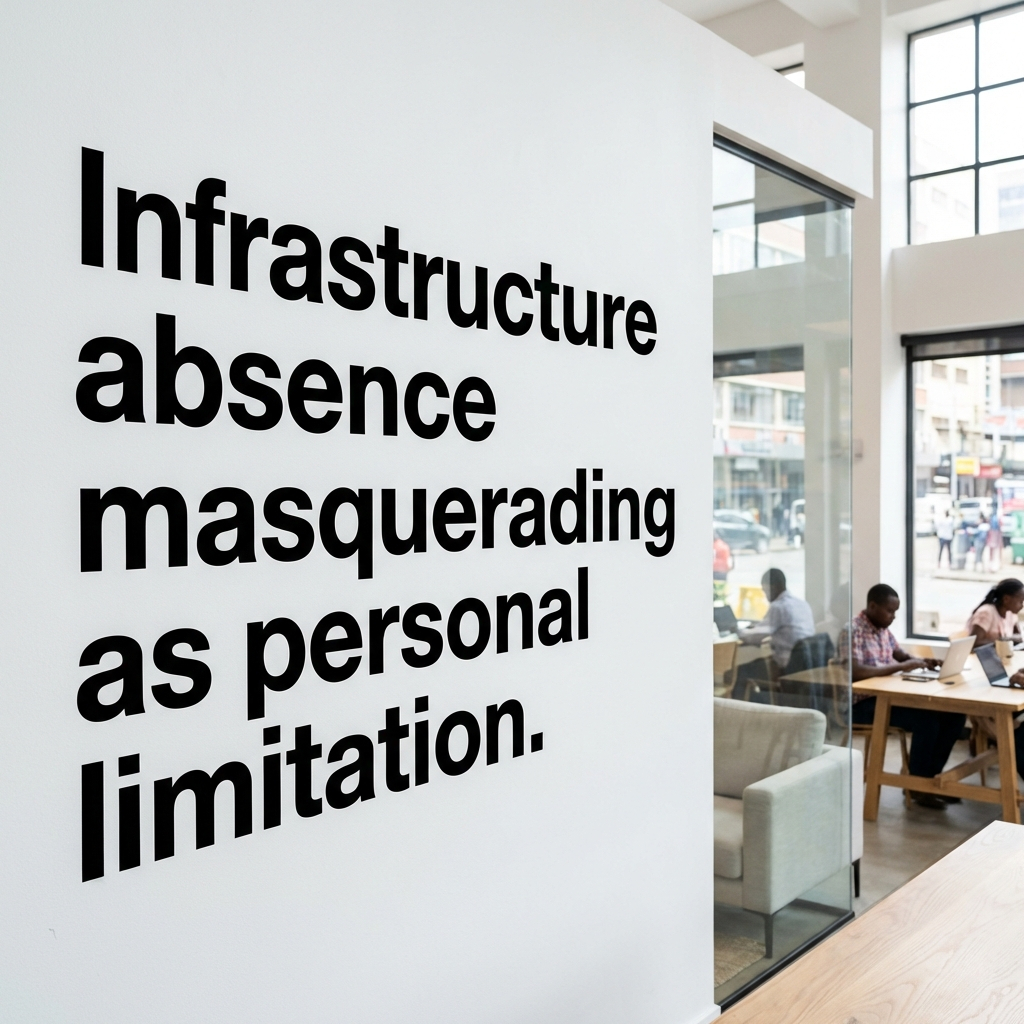
The problem is infrastructure absence masquerading as personal limitation.
Kenya proves this daily. Kenyan startups raised $638 million in 2024, the highest total in Africa. The entrepreneurial momentum exists. The hustle culture thrives. The innovation appetite is undeniable.
What's missing? The operational backbone that converts effort into scalable outcome.
Core insight: Capability exists in abundance. Infrastructure access does not. This gap creates the barrier between effort and scalable revenue.
Why Do Entrepreneurs Stay Problem-Aware Instead of Solution-Aware?
I've watched this pattern play out for years.
An entrepreneur identifies a problem in their market. They solve it manually. The solution works. They repeat the manual process. Again. And again.
Revenue comes in, but growth stays linear because every new customer requires the same manual effort.
They're problem-aware. They know inefficiency costs them money and time.
But they're not solution-aware. They don't realize that CRM systems, automated lead capture, payment processing integration, and follow-up sequences already exist. They don't know these tools are accessible and affordable.
This gap frustrates me more than anything else in business.
Not because entrepreneurs lack intelligence.
The industry deliberately obscures infrastructure behind complexity, guru theatrics, and inflated pricing. This suggests these systems belong only to enterprises with deep pockets.
That's fiction designed to protect market position.
The pattern: Problem awareness exists everywhere. Solution awareness gets deliberately hidden behind artificial barriers.
How Does M-Pesa Prove the Infrastructure Model Works?
Kenya already proved what happens when you eliminate infrastructure barriers.
M-Pesa spread quickly, and by 2010 had become the most successful mobile-phone-based financial service in the developing world. It gave millions of people access to the formal financial system who previously had none.
The capability to manage money existed. The infrastructure to do it efficiently did not.
M-Pesa provided the infrastructure. Adoption followed rapidly.
By 2025, over 60 million active users in Kenya use M-Pesa. The barrier was not user sophistication. The barrier was infrastructure absence.
That's the exact pattern I'm addressing with Ignite Funnels.
Kenyan entrepreneurs already possess the capability to build scalable businesses. They lack the operational infrastructure that converts manual effort into automated systems.
When you provide that infrastructure without artificial complexity or enterprise pricing, adoption accelerates.
Proven model: M-Pesa eliminated financial infrastructure barriers. Ignite Funnels eliminates business automation infrastructure barriers. The mechanism is identical.
What Does Ignite Funnels Provide to Kenyan Entrepreneurs?
Let me be direct about what we provide.
Ignite Funnels gives entrepreneurs the same operational infrastructure that enterprises pay tens of thousands of dollars to build.
Here's what that means in practice:
Complete CRM system: Organizes every contact, tracks every interaction, and ensures you never lose a lead because you forgot to follow up. Research shows that businesses using CRM software experience a 300% increase in conversion rates. That's not marketing hyperbole. That's what happens when you stop relying on memory and start relying on systems.
Automated lead capture: Works 24/7. Your website becomes a lead generation machine instead of a digital brochure. Prospects enter their information. The system captures it, categorizes it, and triggers the appropriate follow-up sequence without you touching anything.
Payment processing integration: Accepts multiple payment methods and reconciles everything automatically. No more spreadsheet chaos. No more manual invoice tracking. No more wondering who paid and who did not.
Email and SMS automation: Nurtures prospects through your sales process while you sleep. The system sends the right message to the right person at the right time based on their behavior and stage in your funnel.
All of this runs for 1,500 to 3,500 Kenyan shillings per month.
Not tens of thousands. Not hundreds of thousands. Between $11 and $27 USD monthly.
Bottom line: Enterprise-grade infrastructure at solopreneur pricing. Four core systems working together to convert manual effort into automated revenue.
How Long Does It Take to Learn Ignite Funnels?
I will not compress the timeline to make this sound easier than it is.
You learn the core system and deploy your first funnel within a few days. That's real.
Mastering the full capability takes longer. You'll spend weeks discovering features. Months optimizing workflows. The system grows with you as your business complexity increases.
This matters because the industry sells speed and ease to maximize conversion. They promise overnight transformation. They hide the work required. Then entrepreneurs feel like failures when reality does not match the marketing.
I refuse to operate that way.
The truth: Ignite Funnels requires commitment to learning. You'll invest time upfront.
That investment pays dividends beyond measure because you're building infrastructure that compounds over years, not renting attention that disappears the moment you stop paying.
Realistic timeline: Days to deploy. Weeks to discover. Months to master. Years to compound returns.
Why Did Ignite Funnels Choose Kenya as the First Market?
Kenya earned this launch for specific reasons.
Entrepreneurial momentum already exists: With internet penetration reaching 48% by 2025 and Kenya's digital economy expected to contribute up to 9.24% of GDP, the foundation is set. The infrastructure I'm providing plugs into infrastructure that's already growing.
Market understands digital tools: When Safaricom and Airtel process over $309.4 billion in transactions annually, representing more than 95% of all retail digital payments, that tells me Kenyan entrepreneurs already trust digital systems. They need business automation that's as accessible as M-Pesa.
Hustle culture matches the mission: Kenya prides itself on dynamism and entrepreneurial spirit. Total venture capital startup funding hit $800 million in 2023. That's not passive wealth seeking additional optimization. That's active capability seeking infrastructure to scale.
Gap between capability and outcome is visible: Factors hindering growth include accessibility to capital, limited domestic market size, and insufficient government support. Infrastructure absence sits at the core. When you solve infrastructure, you unlock capability that's already present.
Strategic fit: Kenya combines existing digital infrastructure adoption, entrepreneurial momentum, and visible capability-to-outcome gap. This creates ideal conditions for infrastructure-first solutions.
What Does Success Look Like with Ignite Funnels?
My goal is to make more millionaires in Kenya than any other person that has ever existed.
That's not motivational theater. That's operational intent.
Every entrepreneur who builds a sustainable, scalable business using Ignite Funnels proves that capability was never the limiting factor. Infrastructure was.
When you eliminate that barrier, you create economic transformation that compounds across generations.
We've already seen this work in the United States. Entrepreneurs using our frameworks, funnels, checkout processes, and follow-up systems have closed their first five-figure and six-figure deals. The infrastructure enabled what capability alone could not achieve.
Now we're translating that success into Kenya.
Success metric: Sustainable scalable businesses built by entrepreneurs who previously lacked infrastructure access. Economic transformation measured in millionaires created, not products sold.
The Misconceptions I'm Fighting
Let me address the objections directly.
"I need to know coding to use this." You don't. The system is built for non-technical users. If you can use M-Pesa, you can use Ignite Funnels.
"This costs too much for a small business." At 1,500 to 3,500 shillings monthly, you're spending less than most entrepreneurs waste on inefficient manual processes. Companies that invest in CRM see an average return of $8.71 for every $1 spent. The cost isn't the barrier. The perception is.
"I can do this manually for now and upgrade later." You can. But every month you operate manually is a month you're choosing linear growth over exponential possibility. The question isn't whether you can afford the system. It's whether you can afford to keep scaling yourself instead of your infrastructure.
What I'm Actually Asking
I'm asking you to recognize that the barrier between where you are and where you want to be isn't capability.
It's infrastructure.
I'm asking you to understand that systems aren't luxuries reserved for enterprises. They're necessities for anyone serious about building something sustainable.
I'm asking you to commit to learning something new, knowing the upfront investment of time produces infrastructure that works for you long after the learning curve flattens.
Most importantly, I'm asking you to believe that you deserve access to the same operational backbone that enterprise businesses take for granted.
Because you do.
Kenya gets Ignite Funnels first because Kenyan entrepreneurs represent everything I believe about capability waiting for infrastructure. The hustle exists. The innovation appetite thrives. The market momentum builds.
What's been missing is the operational backbone that converts all that capability into sustained revenue generation.
That's what we're providing. Not motivation. Not theory. Infrastructure.
The kind that eliminates the decade-long navigation I had to suffer through. The kind that puts enterprise-grade automation in the hands of solopreneurs who deserve it. The kind that proves, once and for all, that when you remove infrastructure barriers, capability converts to outcome.
That's why Kenya. That's why now. That's why this matters beyond any single business transaction.
We're not just launching a product. We're eliminating a barrier that's kept too many talented Kenyan entrepreneurs stuck in manual mode for too long.